05
Nov
2025

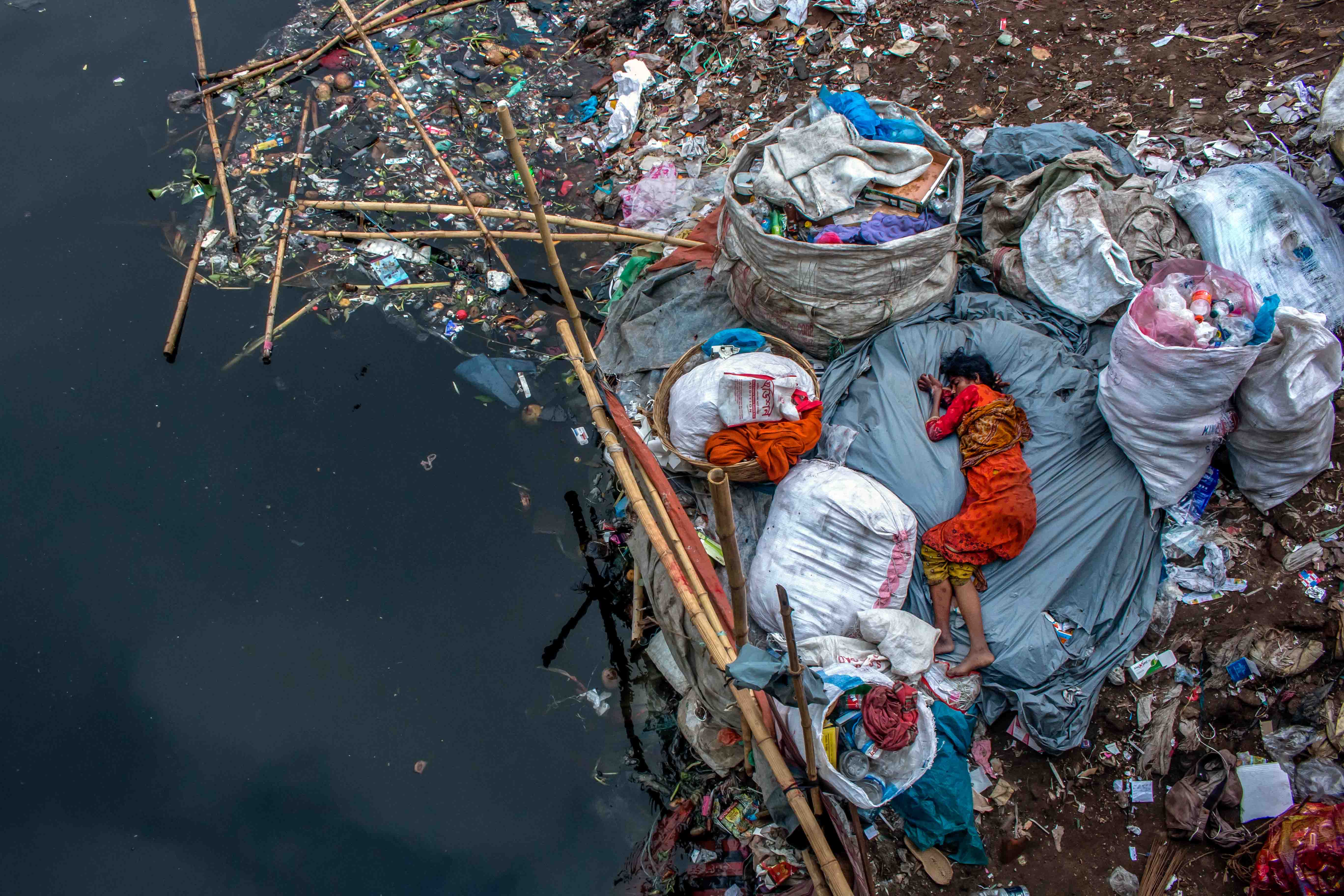
Every city has two faces: one that shines under neon lights, and another that remains hidden in the shadows of unfinished buildings, crowded markets, and riverbanks. This story follows the second one — the quiet city where people sleep in the open, not because they choose to, but because life has left them no other space.
In a city that never slows down, rest becomes a luxury. People work all day pulling rickshaws, unloading river boats, sorting garbage, building roads, carrying loads, or waiting for the next uncertain job. When exhaustion arrives, they do not return to private rooms behind closed doors. Instead, they lie down wherever their bodies can collapse. A bridge becomes a bedroom. A broken boat becomes a cradle. A railway roof becomes a pillow. A market floor becomes a resting place shared with others who carry the same weight of survival.
The city moves around them — loud, crowded, relentless — yet these moments of sleep remain deeply personal. In these quiet pauses, we see something human and universal: the need to rest, to dream, to survive another day. Even in the hardest conditions, life continues with courage. There is vulnerability here, but also resilience. There is struggle, but also hope.
This series is not about poverty alone. It is about presence — the people who live among us but are rarely seen. The ones who build the city, carry its weight, clean its waste, and keep it alive — yet remain invisible to its comfort.
“Where the City Sleeps” invites the viewer to slow down and look. To understand that rest is not equal for everyone. To recognize that behind every sleeping body lies a story of work, migration, family, loss, endurance, and dreams.
This is the city behind the city — where silence speaks louder than noise.

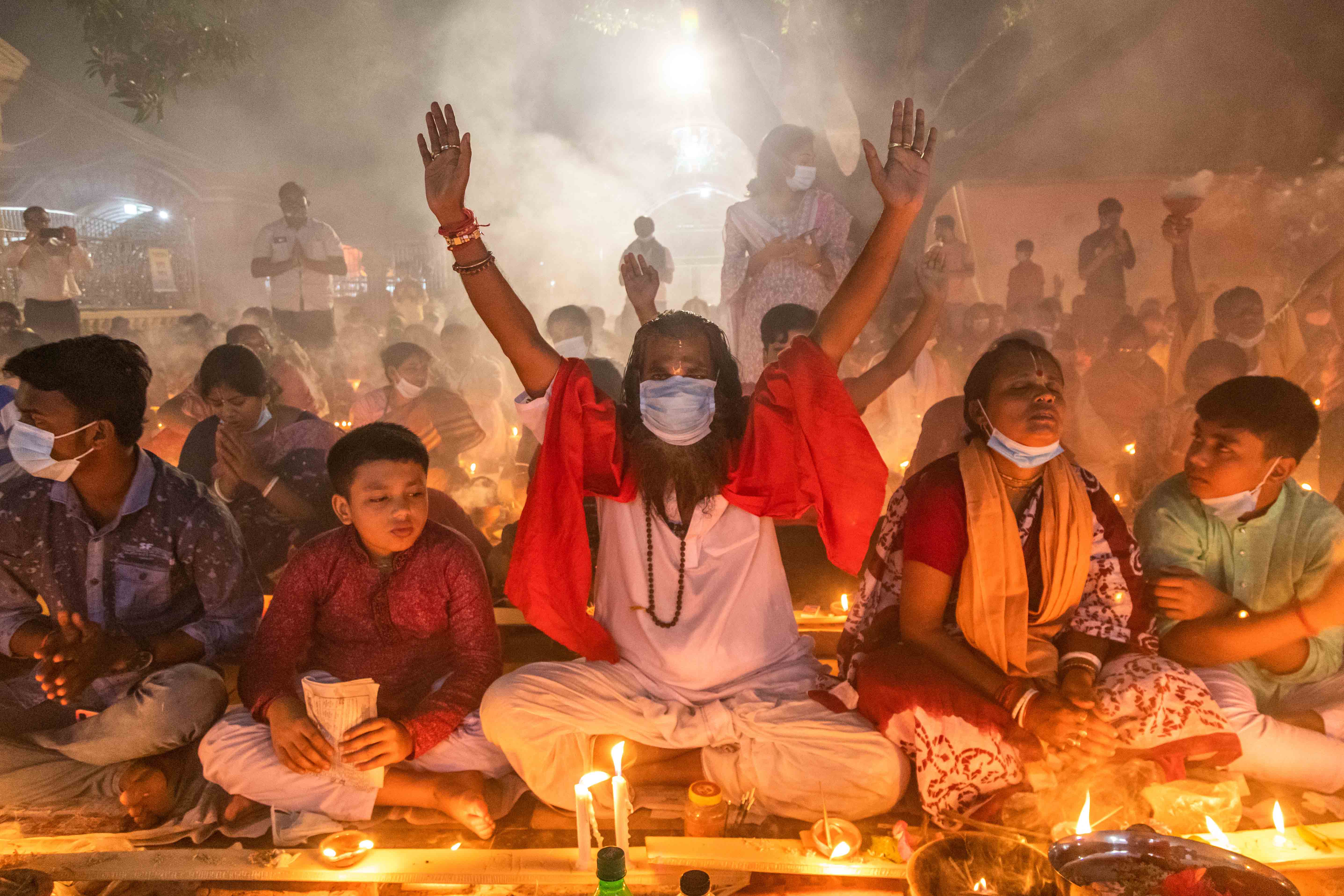
On a crisp evening in the sacred month of Kartik (October–November), the grounds of the Shri Shri Lokenath Brahmachari Ashram at Barodi (near Dhaka) begin to glow. Thousands of small earthen oil-lamps (“pradip”) are placed in neat rows on banana leaves or mats. Devotees sit cross-legged in front of them, hands joined in prayer, amid the soft flicker of flame, the scent of incense, and the hush of contemplation.
Rakher Upobash, also known as “Kartik Brati,” is a sacred fast and prayer observance dedicated to the 18th-century saint Baba Lokenath Brahmachari. The faithful believe that through the fast, the lighting of lamps and incense, and heartfelt devotion, blessings of health, peace and prosperity may be attained.
From dawn to dusk the participants observe a day‐long fast. As evening deepens, the ashram becomes the epicentre of a luminous gathering. Lamps glow, hands fold, hymns and mantras rise in the air. Families, elders, young men and women — all come together in prayer. Many carry offerings of fruit, sweets and flowers. The act of lighting the lamp symbolises the victory of light over darkness, hope over despair.
More than a religious ceremony, Rakher Upobash is a cultural expression of faith and identity for the Hindu community in Bangladesh. In the Muslim-majority nation, the festival stands as a reminder of peaceful coexistence, devotion transcending boundaries.
It is a time when social bonds strengthen: after hours of prayer, families gather, share the breaking of the fast, exchange greetings. The visual spectacle — countless lamps, smoke rising, the hush of devotion — draws photographers, travellers and curious souls alike.
Standing amid the row of lamps, one can feel the weight of generations who observed this fast before, the flicker of flame tying past to present. The silence after prayer, the soft glow of oil, the communal breath of hope: in these moments, the festival reveals something deeper — about devotion, about seeking light in our lives, about reaching out for the divine through simple acts.
Faith: The fast and lamp-lighting are acts of surrender and hope.
Culture: Upholding a tradition that has lived through generations in Bengal.
Unity: Bringing together families, devotees of all ages, in one shared space of prayer.
Symbolism: Light conquering darkness, community over isolation, devotion over routine.
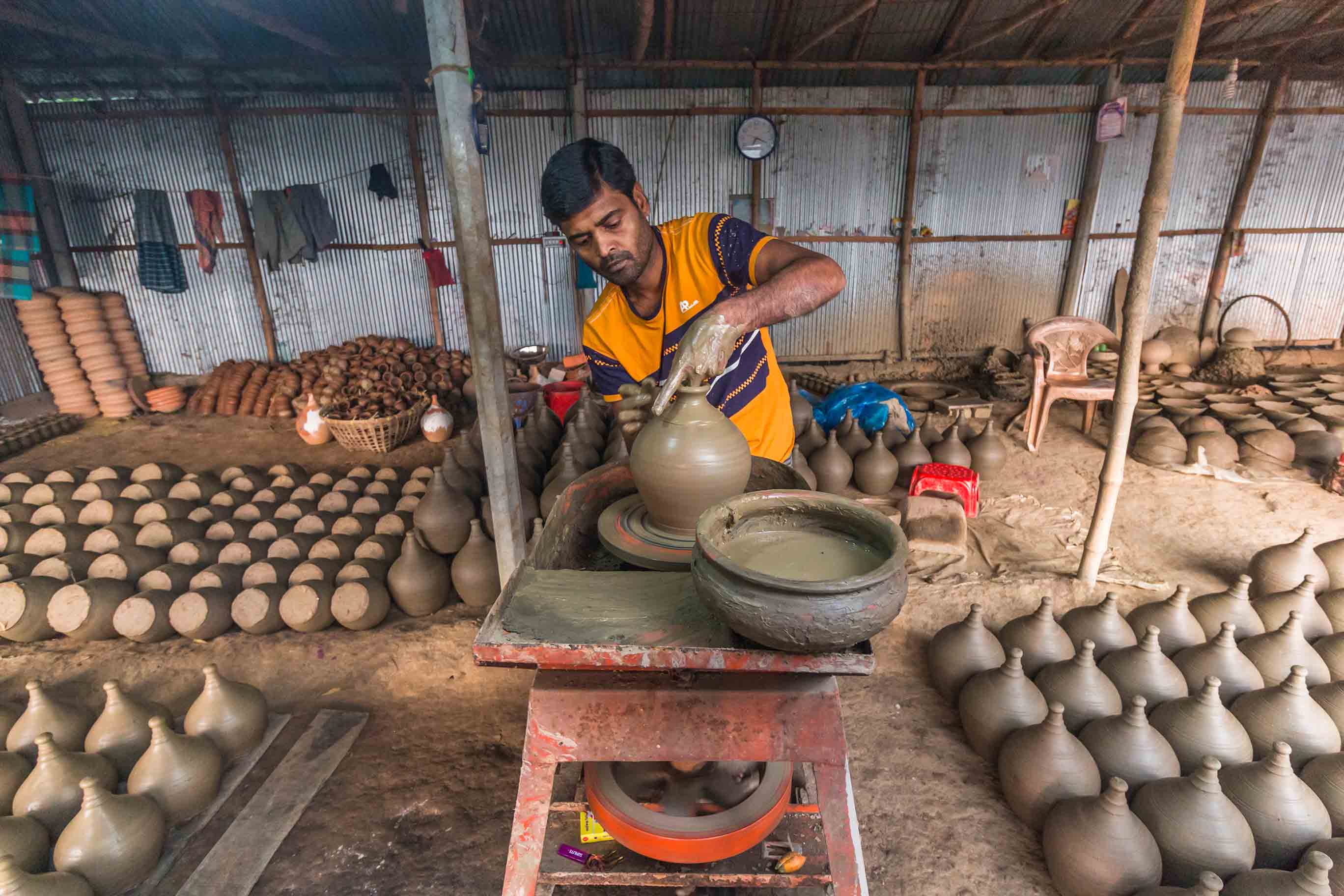
Clay pottery is a significant traditional craft that has been passed down through generations as a means of livelihood. The artisans create their magical works of art using only three natural ingredients — clay, water, and sunshine.
Baropara, a village in Bijoypur, just a few kilometers away from Cumilla town, is widely renowned for its pottery industry. The local artisans have long upheld this tradition, skillfully crafting all kinds of clay wares — from shaping raw clay to firing it in the kilns.
The distinctive red tones of fired pottery are not just beautiful — they symbolize both heritage and hope in Bijoypur.
Sadly, the potters of today are no longer earning enough to sustain their families. They are facing severe financial hardship, as the glorious days of their craft have faded with the advancement of modern technology.
The once-thriving pottery community is now marginalized, struggling against industrial competition and changing market demands. As a result, many potters find it difficult to educate their children, while their housing and healthcare conditions have deteriorated due to low income.
Despite these challenges, there is still hope for revival. The government has established a Pottery Training Centre at Bijoypur, recognizing the area’s deep-rooted connection to this age-old industry. Around 50 potters currently work at the centre, continuing to preserve and promote this heritage craft.
The artisans now look forward to future initiatives — such as flexible loan facilities and export development programs — that may help them regain their prosperity and ensure the survival of this centuries-old tradition.