
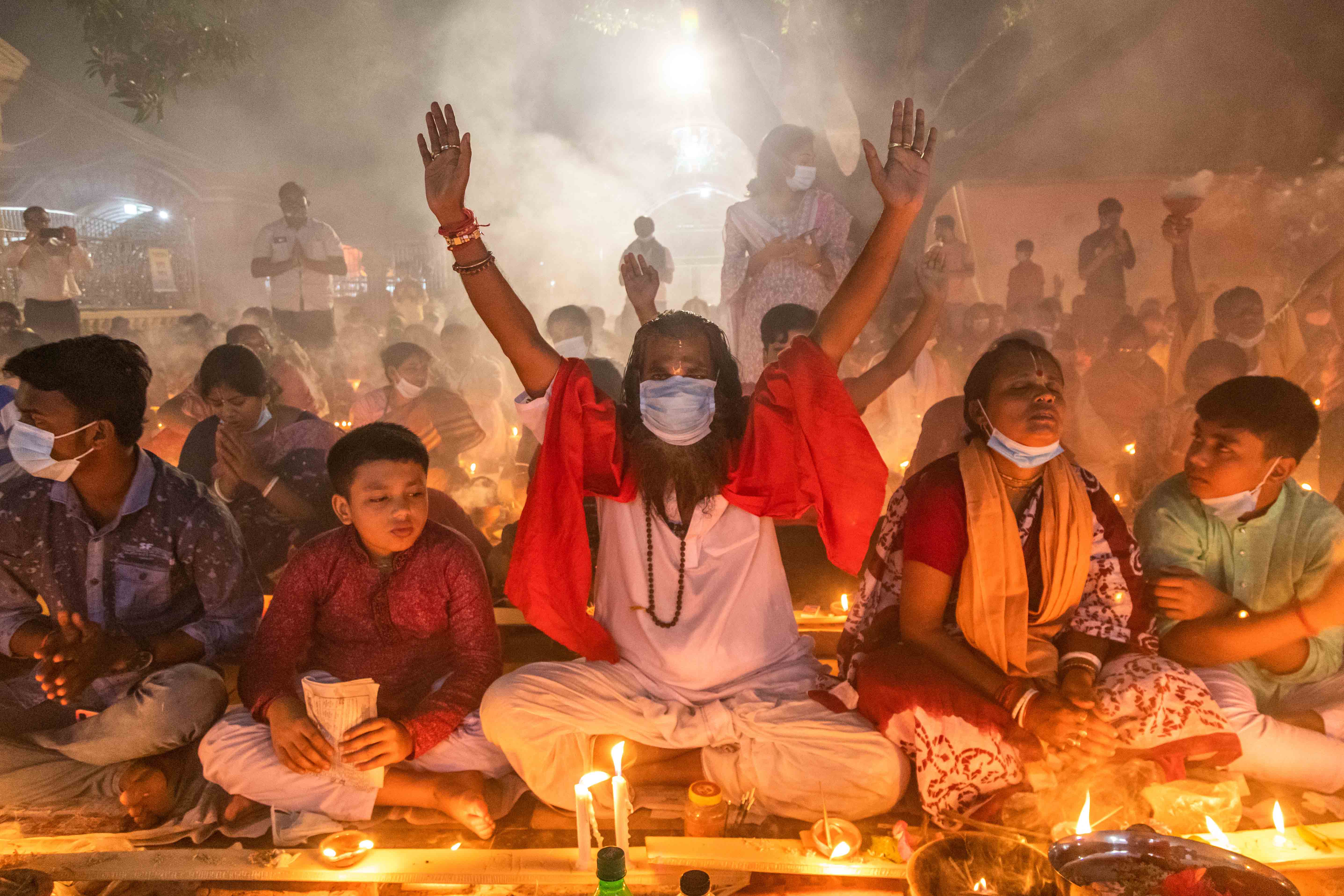
Rakher Upobash Festival
A Night of Lights and Faith
On a crisp evening in the sacred month of Kartik (October–November), the grounds of the Shri Shri Lokenath Brahmachari Ashram at Barodi (near Dhaka) begin to glow. Thousands of small earthen oil-lamps (“pradip”) are placed in neat rows on banana leaves or mats. Devotees sit cross-legged in front of them, hands joined in prayer, amid the soft flicker of flame, the scent of incense, and the hush of contemplation.
Rooted in Devotion
Rakher Upobash, also known as “Kartik Brati,” is a sacred fast and prayer observance dedicated to the 18th-century saint Baba Lokenath Brahmachari. The faithful believe that through the fast, the lighting of lamps and incense, and heartfelt devotion, blessings of health, peace and prosperity may be attained.
The Ritual Unfolds
From dawn to dusk the participants observe a day‐long fast. As evening deepens, the ashram becomes the epicentre of a luminous gathering. Lamps glow, hands fold, hymns and mantras rise in the air. Families, elders, young men and women — all come together in prayer. Many carry offerings of fruit, sweets and flowers. The act of lighting the lamp symbolises the victory of light over darkness, hope over despair.
Significance & Community
More than a religious ceremony, Rakher Upobash is a cultural expression of faith and identity for the Hindu community in Bangladesh. In the Muslim-majority nation, the festival stands as a reminder of peaceful coexistence, devotion transcending boundaries.
It is a time when social bonds strengthen: after hours of prayer, families gather, share the breaking of the fast, exchange greetings. The visual spectacle — countless lamps, smoke rising, the hush of devotion — draws photographers, travellers and curious souls alike.
A Moment of Reflection
Standing amid the row of lamps, one can feel the weight of generations who observed this fast before, the flicker of flame tying past to present. The silence after prayer, the soft glow of oil, the communal breath of hope: in these moments, the festival reveals something deeper — about devotion, about seeking light in our lives, about reaching out for the divine through simple acts.
Why It Matters
-
Faith: The fast and lamp-lighting are acts of surrender and hope.
-
Culture: Upholding a tradition that has lived through generations in Bengal.
-
Unity: Bringing together families, devotees of all ages, in one shared space of prayer.
-
Symbolism: Light conquering darkness, community over isolation, devotion over routine.
